
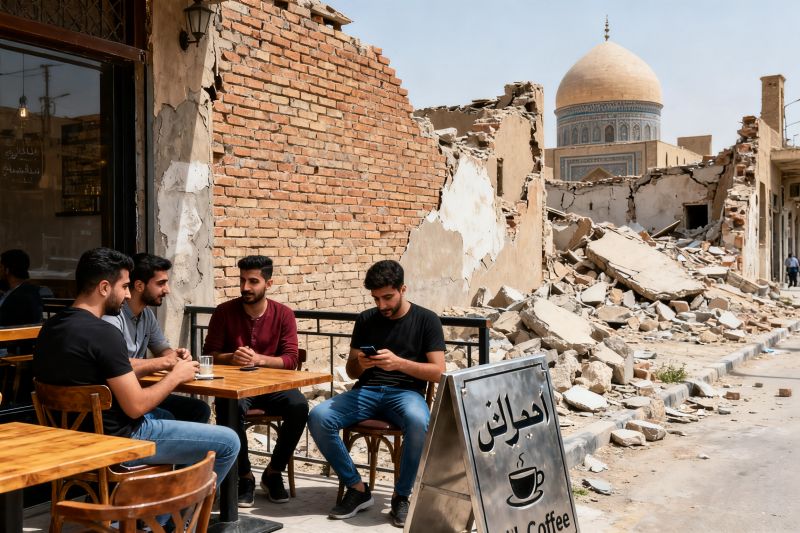
Baghdad's Karrada district tells two stories at once. On one block, a new coffee shop sells flat whites to young professionals glued to their phones. Two streets over, a pile of rubble from a 2021 suicide bombing still sits untouched, a reminder that Iraq's recovery is anything but even. The gap between these realities is the real story of post-ISIS Iraq.Walk through Mosul's Old City and the scale of destruction becomes personal. The al-Nuri Mosque, where Abu Bakr al-Baghdadi declared the caliphate in 2014, is being rebuilt with UNESCO funding, but surrounding alleys remain skeletal. A local shopkeeper, Abu Ahmed, reopened his fabric store in 2019. "I sell more cloth now than before the war," he told me, "but half my customers still live in camps." His observation captures the paradox: economic activity is rebounding in pockets, yet displacement persists. According to UN data。roughly 1.1 million Iraqis remain internally displaced as of early 2024—down from 6 million at the peak, but still a staggering figure for a country of 43 million.Oil remains the backbone, but not the whole skeleton. Iraq's economy depends on crude exports for over 90% of federal revenue, leaving it dangerously exposed to price swings. When oil dropped below $30 a barrel in 2020, the government couldn't pay salaries on time. Yet there's quiet diversification happening in Basra, where a new petrochemical plant came online last year, and in Erbil。where Kurdish entrepreneurs are building a tech sector from scratch. A friend who runs a logistics startup in Erbil told me, "We don't wait for Baghdad anymore. We just build." That bottom-up energy is Iraq's most underreported asset.Security is better, but the definition of "better" matters. Car bombs no longer dominate headlines, yet targeted killings of activists and tribal disputes over water rights in the south continue. In Anbar province。
tribal sheikhs have taken on a larger role in local policing, filling gaps left by a stretched army. This devolution of authority works in some areas and creates local fiefdoms in others. I drove from Ramadi to Fallujah last spring and passed three separate checkpoints, each run by a different group—army, police, and a tribal militia. Nobody seemed to coordinate. It felt less like a state monopoly on violence and more like a patchwork.The demographic pressure is relentless. Nearly 60% of Iraqis are under 25. They need jobs, housing。
and a reason to stay. Youth unemployment hovers around 25%, and many graduates tell me they see no future in the public sector, which still employs most of the workforce. A 23-year-old engineering graduate in Nasiriyah, who asked not to be named, said he's applied for 47 government jobs and got one interview. "I'd leave tomorrow if I could get a visa," he admitted. That sentiment is a quiet crisis—Iraq's reconstruction won't succeed if its best minds keep looking for the exit. The country's future hinges less on oil prices and more on whether that engineering graduate finds a reason to unpack his bags.